

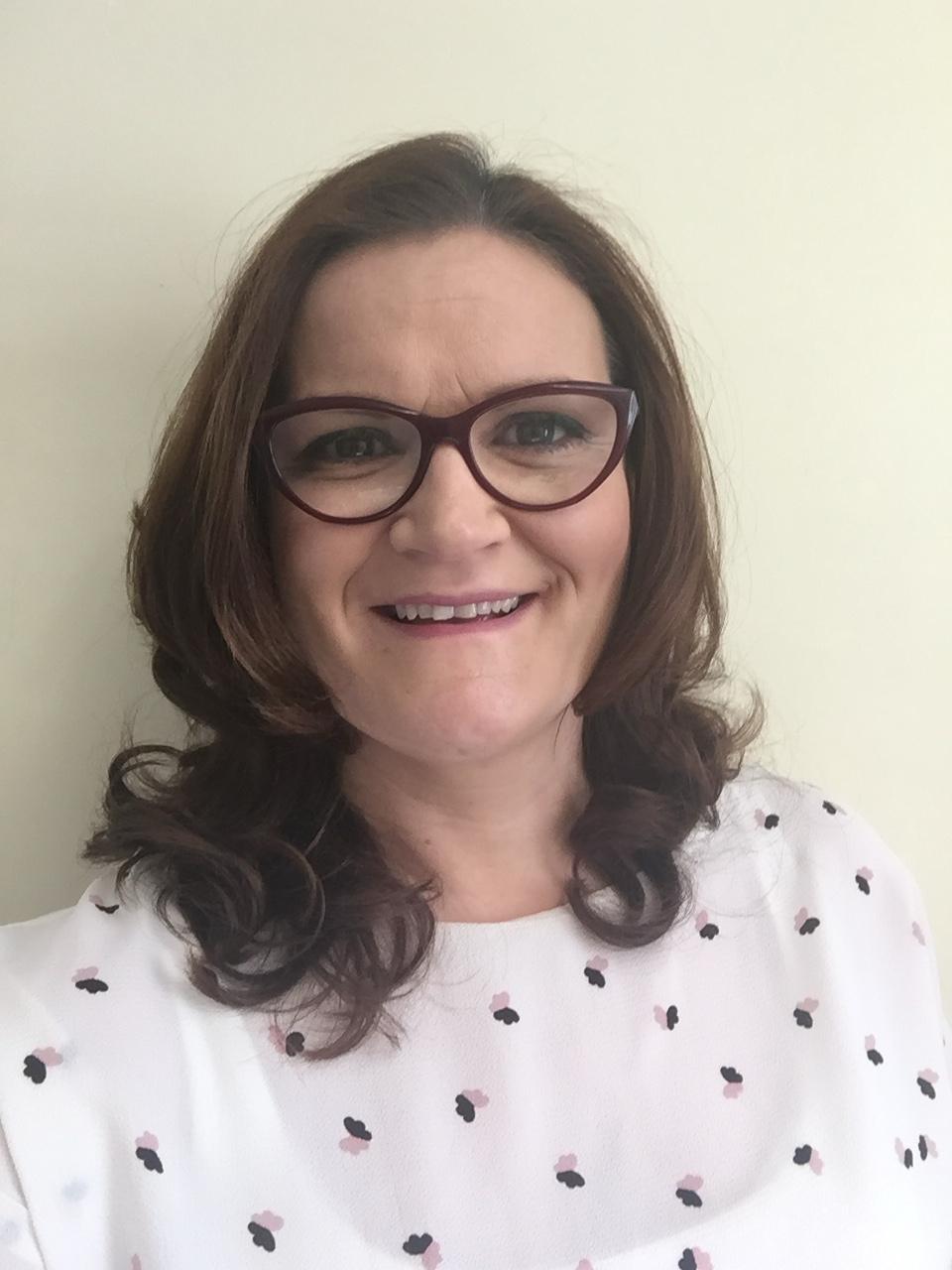
Sandra McGonigle
Patient
At 45, open-heart surgery wasn’t on Sandra McGonigle’s radar. But research, determination and support from patients and professionals helped her advocate for care that transformed her life.
It was April 2021, and Sandra was anxiously waiting to be transferred from Derry to Belfast for the procedure. She had only days to make decisions about one of the biggest operations of her life.
A year earlier, in April 2020, she had visited her GP after feeling unusually fatigued. She’d assumed the tiredness was caused by overwork and the unavoidable effects of ageing. But a routine check revealed a heart murmur, and an echocardiogram confirmed she had aortic stenosis with a bicuspid valve. Sandra knew she’d eventually need a valve replacement, but surgery seemed some way off. “I continued to work and go about my life until February 2021, when I felt really, really dizzy and thought I was about to faint,” Sandra recalls.
That search led her to an online community of patients whose experiences shed light on new professional contacts, research and data, including the possibility of a tissue valve
Urgent decisions
Her GP sent her straight to hospital, where Sandra was told she needed a valve replacement immediately. Things moved quickly, and she was isolated in Derry while waiting for a bed to become available at Belfast’s Royal Victoria Hospital. It was only then that she had both the time and the urgency to consider her options. “I knew that the NICE guidelines recommended that somebody like me has a mechanical valve,” she explains. “Because of my nursing background, I knew that was something I didn’t really want.”
A mechanical valve would mean taking a blood-thinning medication for life. Both Sandra’s father and grandmother had experienced complications with the drug, and the challenges of long-term anticoagulation didn’t support her lifestyle. Unsure what to do next, Sandra broke a golden rule. “I did what I told my patients not to do,” she says with a smile. “I Googled it.”
Fresh hope
That search led her to an online community of patients whose experiences shed light on new professional contacts, research and data, including the possibility of a tissue valve. While the cardiologist was initially reluctant, Sandra advocated for her case, and he agreed to the tissue valve replacement. “And I’m so glad I did,” she says with a smile. “Life is so much better now. I have so much more energy. I can do things that I couldn’t do before.” The only mild inconvenience is the low dose of aspirin she takes. Otherwise, she’s increased her hours to full-time, is walking more, and even advocating for greater patient involvement in healthcare decisions. “Surgeons are the medical experts,” she says. “But the living experts are the people who’ve been through it.”
