
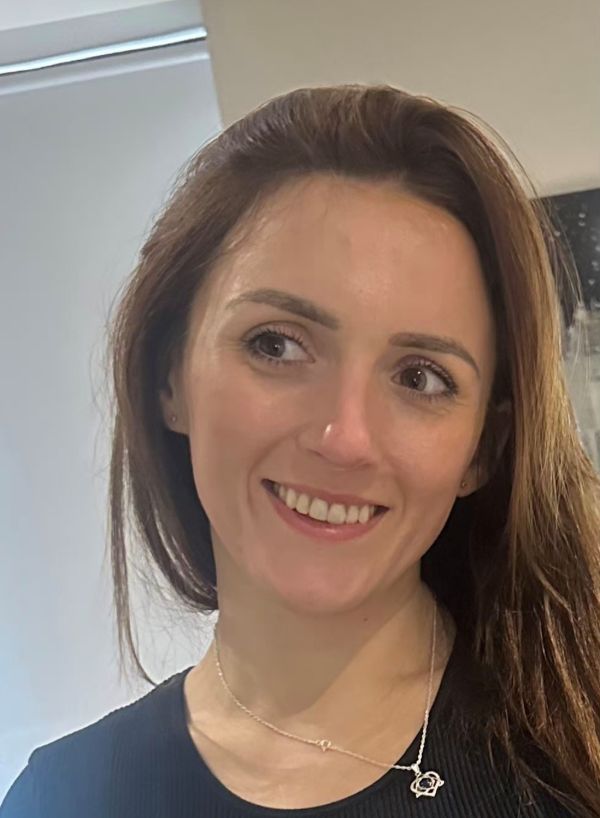
Rebecca King
Patient
Patient with long-standing urinary issues highlights her life-changing experience with sacral neuromodulation, a minimally invasive therapy used to treat bladder and bowel dysfunction.
While many people feel embarrassed or uncomfortable speaking about symptoms of urinary incontinence, urgency, frequency or frequent nighttime urination (nocturia), Rebecca King, a patient who once struggled with severe bladder symptoms, hopes to empower others with her story of successful treatment.
“I started experiencing symptoms in my late teens, and it soon began to take over my life,” explains King. “I was physically exhausted; it affected my hobbies, my social life, travel and even just going to the shop.” King experienced extremely severe symptoms, which dominated her life, including using the bathroom not only frequently, but for long periods of time to fully void her bladder, often getting up multiple times a night to go to the toilet.
Exploring treatment options
With symptoms so severe, she attended her local GP for assessment, but was not advised of any tangible treatment options and was not referred for specialist assessment. Sadly, this situation is all too common in clinical practice, as a lack of awareness and associated stigma can delay access to effective treatment methods.
“I felt so deflated because I was so young, and I knew something was wrong,” explains King. “I decided to move practice, and was eventually referred for urology assessment and given a range of options based on my specific case.”
Treatment typically depends on the symptoms, their severity and the patient’s preferences and characteristics. First-line treatments include lifestyle adjustments, such as pelvic floor exercise, followed by medications and several minimally invasive treatments, such as Botox injections, can also be considered. Patients are often required to complete a bladder diary to track symptoms and treatment effects, which helps to inform clinical and shared decision-making.
“Being taken seriously changed everything — to hear you have options and a potential solution gives you hope, and to feel understood is truly life-changing.”
First-line treatments include lifestyle adjustments, such as pelvic floor exercise,
followed by medications and several minimally invasive treatments, such as Botox injections
Sacral neuromodulation
Sacral neuromodulation (SNM) is a minimally invasive therapy that uses a small implanted device to send gentle electrical pulses to the nerves controlling the bladder and bowels. For patients like Rebecca, it can restore communication between the bladder or bowel and the brain, regulating normal function.
“I was finally told I was a candidate for SNM due to an overactive bladder, and after years of monitoring and considering a life of self-catheterisation or lifelong medication, the InterSim device seemed like a no-brainer to me,” explains King. “I was sent for Urodynamic testing under Dr Forde and his team at Beaumont Hospital, following which I received a test device for two weeks to check it was going to work for me before the permanent device was fitted.”
“Getting the device isn’t as scary as you’d imagine. And when it works, you get your life back,” explains King. “While some steps can be quite intrusive, Hannah Graham, an advanced nurse practitioner at the Beaumont Hospital, made the process feel so easy and comfortable.”
Looking back, King notes that the treatment has resulted in far more than just physical symptom relief, but the emotional and social benefits have allowed her to regain her life.
“There is a stigma around urinary issues, which makes it extremely isolating, and it can be very depressing,” says King. “Not being offered options is incredibly diminishing to people’s wellbeing and hope. When you are finally taken seriously and shown a treatment pathway, it changes your whole life. I can finally go horse riding again, play with my children, go to the shops and travel, things most people take for granted.”
